The “Wisdom Spots” You’ve Been Ignoring

Can You Relate?
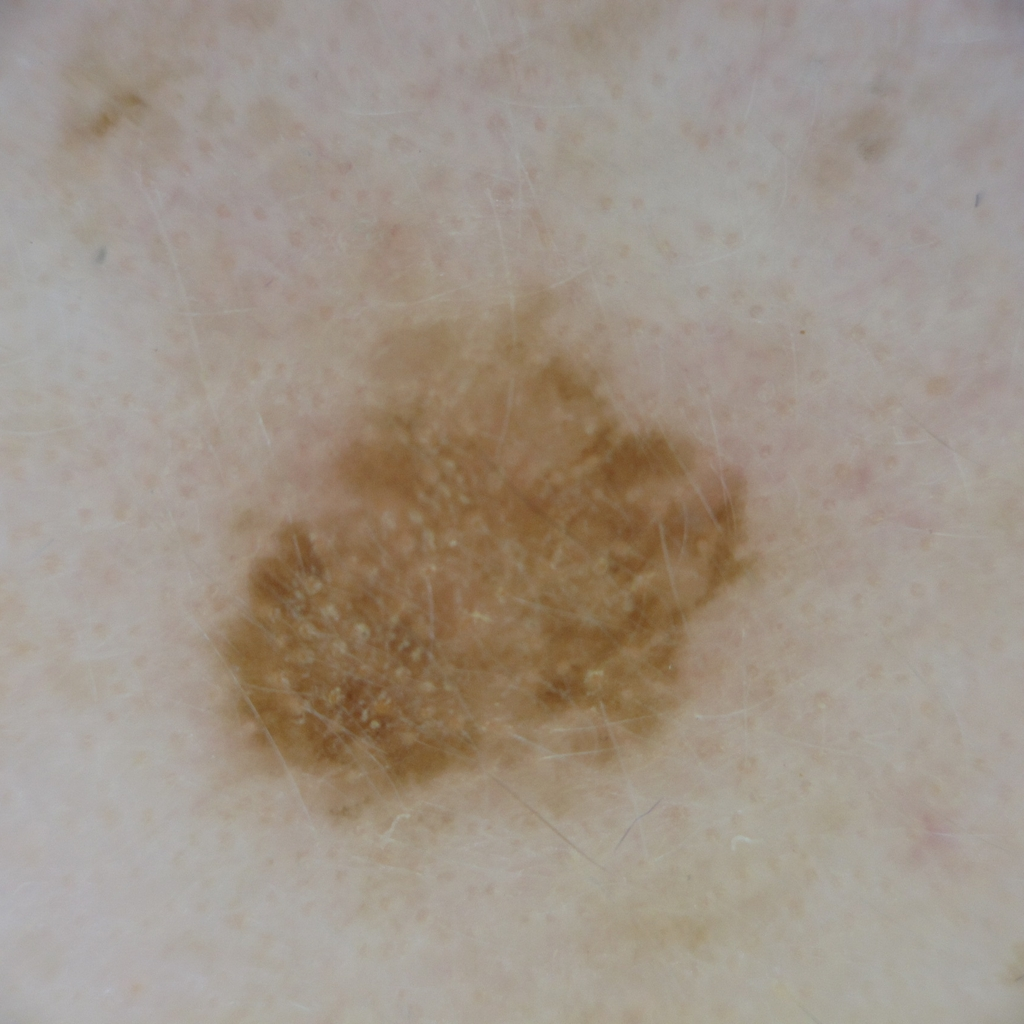
As you’ve gotten older, have you ever noticed spots suddenly appear on your skin? They’re usually slightly raised, maybe a little darker than your other freckles, and they don’t seem to be going away. Oftentimes, these can be “wisdom spots” — harmless and just a part of aging. But what are these spots? And when is it worth taking a closer look at them?
Technically, these are called seborrheic keratoses and are one of those most common non-cancerous skin growths.
They usually show up in adulthood, especially in your 30s, 40s, and beyond, and can show up anywhere on the body. Almost everyone over the age of 50 has at least one.
They often look like:
- Waxy or slightly shiny patches
- Raised or “stuck on” growths
- Light tan, brown, or black in color
- Smooth, rough, or textured
If you have them, you aren’t alone. In fact, most people will get at least one in their lifetime. And in the vast majority of cases, they’re completely harmless.
Why Do They Show Up?
Seborrheic keratoses are a natural part of how skin changes with age.
There’s no single cause, but a few factors seem to play a role:
- Aging skin
- Genetics (they often run in families)
- Having fair skin
- Sun exposure (though the connection isn’t fully understood)
It’s important to know that they’re not a sign that you’ve done anything wrong. They’re simply a part of the skin’s evolution over time.
So… Are They Actually Harmless?
Most of the time, yes. But things can get a little more complicated. Some seborrheic keratoses can closely resemble skin cancers, including melanoma. They can share similar colors, shapes, or textures — especially to the untrained eye.
Even experienced clinicians sometimes need a closer look, or even a biopsy, to be certain. Which means the real risk isn’t the spot itself – it’s assuming every spot is harmless without checking.
When Should You Pay Closer Attention?
Your skin is totally unique to you, so the best baseline you have is your own pattern. If a spot stands out in any way, it’s worth noticing.
Keep an eye out for:
- A spot that’s growing quickly
- Irregular or uneven borders
- Multiple colors or sudden darkening
- Bleeding, itching, or irritation
- Anything that looks different from your other spots (the “ugly duckling”)
None of these automatically mean something is serious – but they are signals to take a closer look as soon as possible.
Can You Prevent Them?
There’s no guaranteed way to prevent wisdom spots. But, you can support your overall skin help by:
- Wearing daily sunscreen (SPF 50+)
- Limiting prolonged sun exposure
- Never using tanning beds
- Performing regular skin checks
Think of it less as prevention — and more as protection and awareness.
Can You Get Rid of Them?
Yes – if they bother you, they can often be removed.
Common in-office treatments include:
- Cryotherapy (freezing the growth)
- Curettage (gently removing the growth from the skin’s surface)
- Laser treatments
- Electrocautery (using heat to remove the growth)
These procedures are usually quick and done by a dermatologist. That said, removal is often considered cosmetic — and the most important first step is to confirm exactly what the spot is.
Knowing Your Skin
Your skin changes over time. That’s totally normal.
What matters most isn’t eliminating every spot – it’s recognizing when something is new, different, or evolving.
The truth is that not every spot is dangerous. But the difference between harmless and harmful isn’t always obvious.
Paying attention to your skin by tracking changes, noticing patterns, and seeking clarity when something feels off can make all the difference. Use SkinCheck to document your spots, monitor changes, and stay one step ahead.
You don’t need to panic over every new mark. But you also don’t need to ignore them. The goal isn’t fear — it’s awareness. Because when it comes to your skin, noticing something early means you can act on it early.


Cleveland Clinic (2021). Seborrheic Keratosis: What Is It, Causes, Risks & Treatment. [online] Cleveland Clinic. Available at: https://my.clevelandclinic.org/health/diseases/21721-seborrheic-keratosis.
Doctors at Kaiser Permanente in MD, VA, DC. (2025). Blogs & News. [online] Available at: https://mydoctor.kaiserpermanente.org/mas/news/seborrheic-keratoses-what-to-know-about-these-benign-skin-growths-2405173.
Oakley, A. (2016). Seborrhoeic keratoses (brown warts, basal cell papillomas, seborrheic keratosis). [online] dermnetnz.org. Available at: https://dermnetnz.org/topics/seborrhoeic-keratosis.
www.mayoclinic.org. (n.d.). Seborrheic keratosis - Diagnosis and treatment - Mayo Clinic. [online] Available at: https://www.mayoclinic.org/diseases-conditions/seborrheic-keratosis/diagnosis-treatment/drc-20353882.
This is an overview of what wisdom spots are, why they appear, and when they may be worth a closer look. For more detailed information, please visit the American Academy of Dermatology (AAD) website or consult with your dermatologist.
Take Control of Your Health
Discover how SkinCheck can help you detect skin cancer early.
Discover insightful articles on various topics.
.png)